Most of you are thinking about AI ads wrong. You're asking 'what can I generate?' when you should be asking 'what does the brain actually respond to?'. Here are some UX knowledge for your marketing team to use directly in our platform:
1. Sticky Content 🧲
Some ideas spread and others die because that content “stick”: people remember it, share it, and act on it. The most memorable ideas share five qualities:
- they're Simple (one clear idea, not five)
- Unexpected (they break a pattern)
- Concrete (specific and tangible, not abstract)
- Emotional (they make you feel something)
- Story-driven (they have a beginning, tension, and resolution).
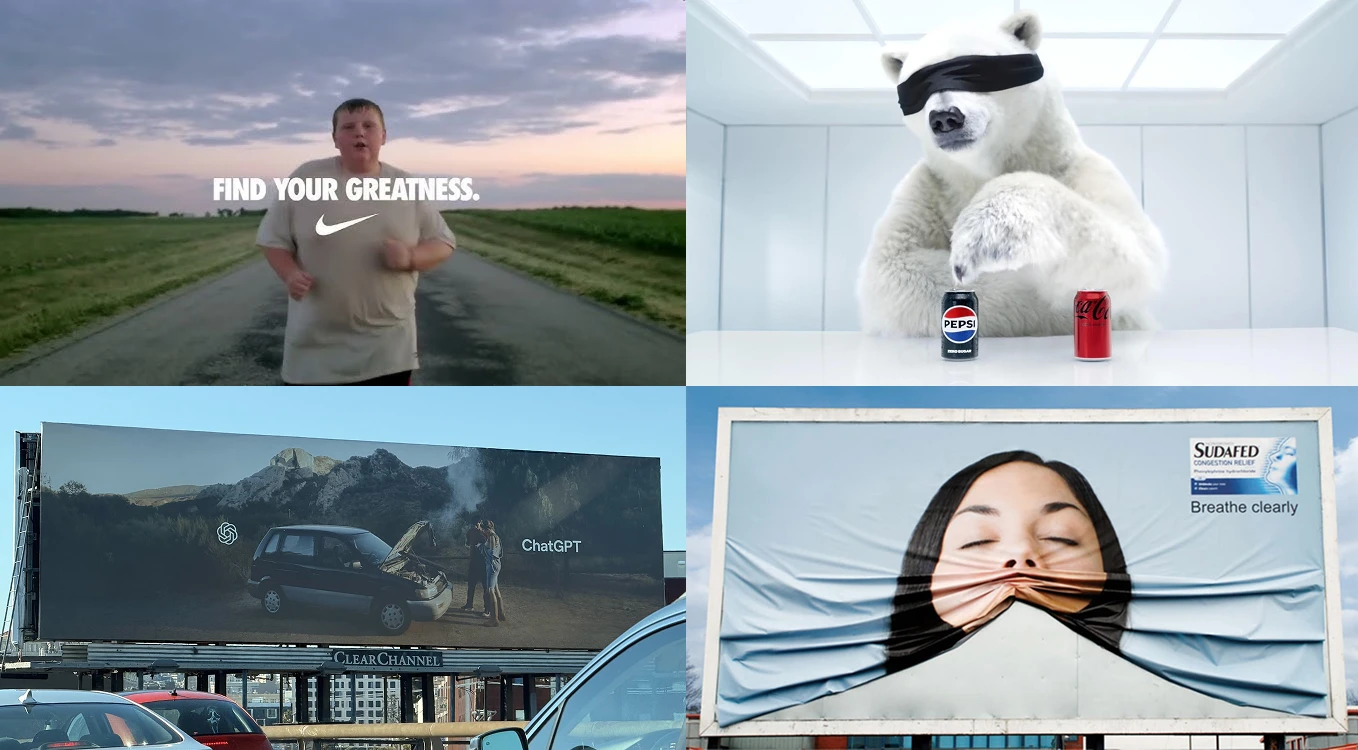
Watch the top-performing videos on TikTok, Instagram, or LinkedIn this week. A video that makes someone laugh hard enough, or is interesting enough to immediately show the person sitting next to them is not just going viral, it's generating watch-time data that tells the algorithm "people are rewatching this." The platform responds by pushing it to more people.
When briefing your next AI video, think it with this in mind before you start prompting. If it only checks two boxes, go back to the concept stage.
2. Banner Blindness 🙈
Users have been trained, over years of internet use, to ignore anything that looks like advertising.
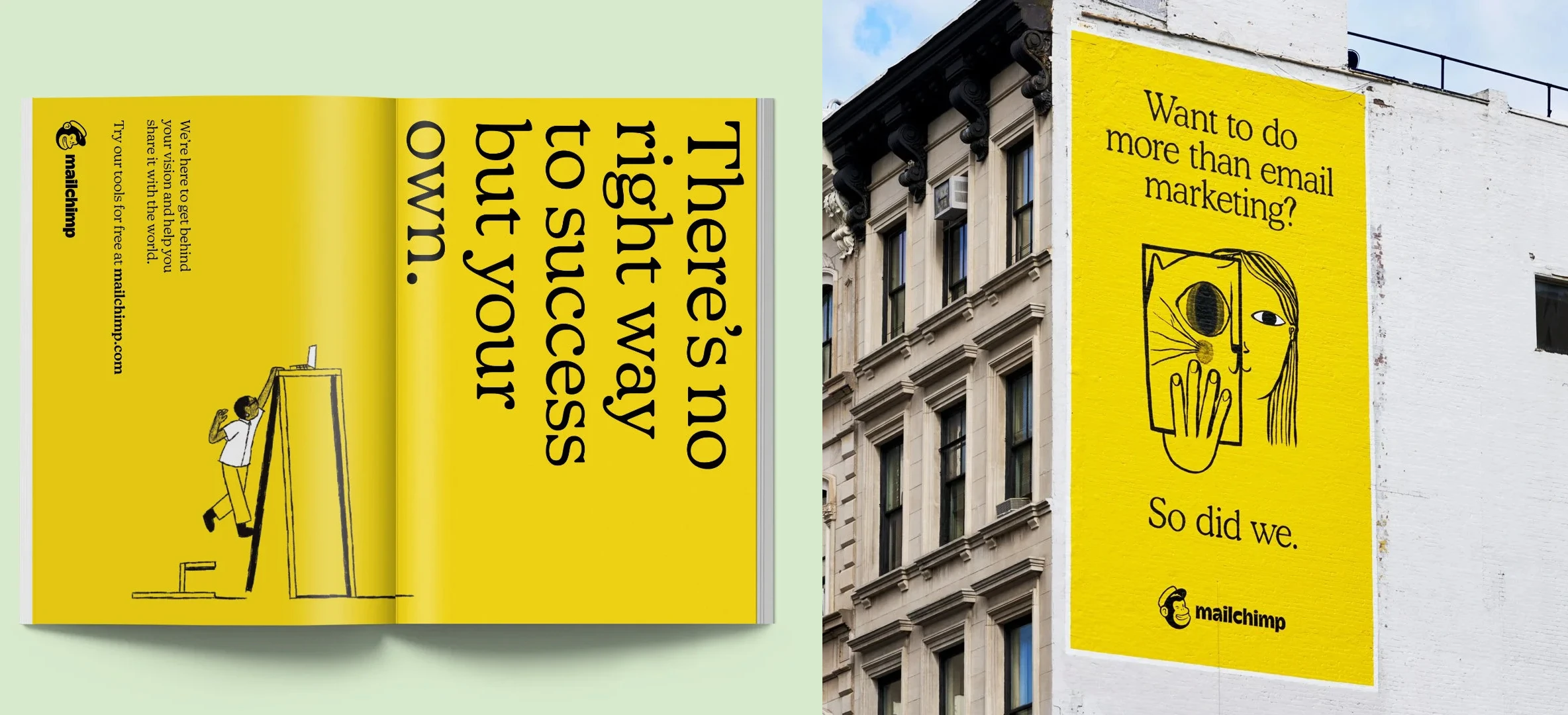
It doesn't matter how good your creative is. If it visually resembles what the brain has catalogued as "ad-shaped content," the eyes slide right past it. The practical implication for AI ads in 2026 is this: the aesthetic of your ad matters as much as the message.
Content that looks native to the platform:
- Raw
- Slightly imperfect
- Human in texture
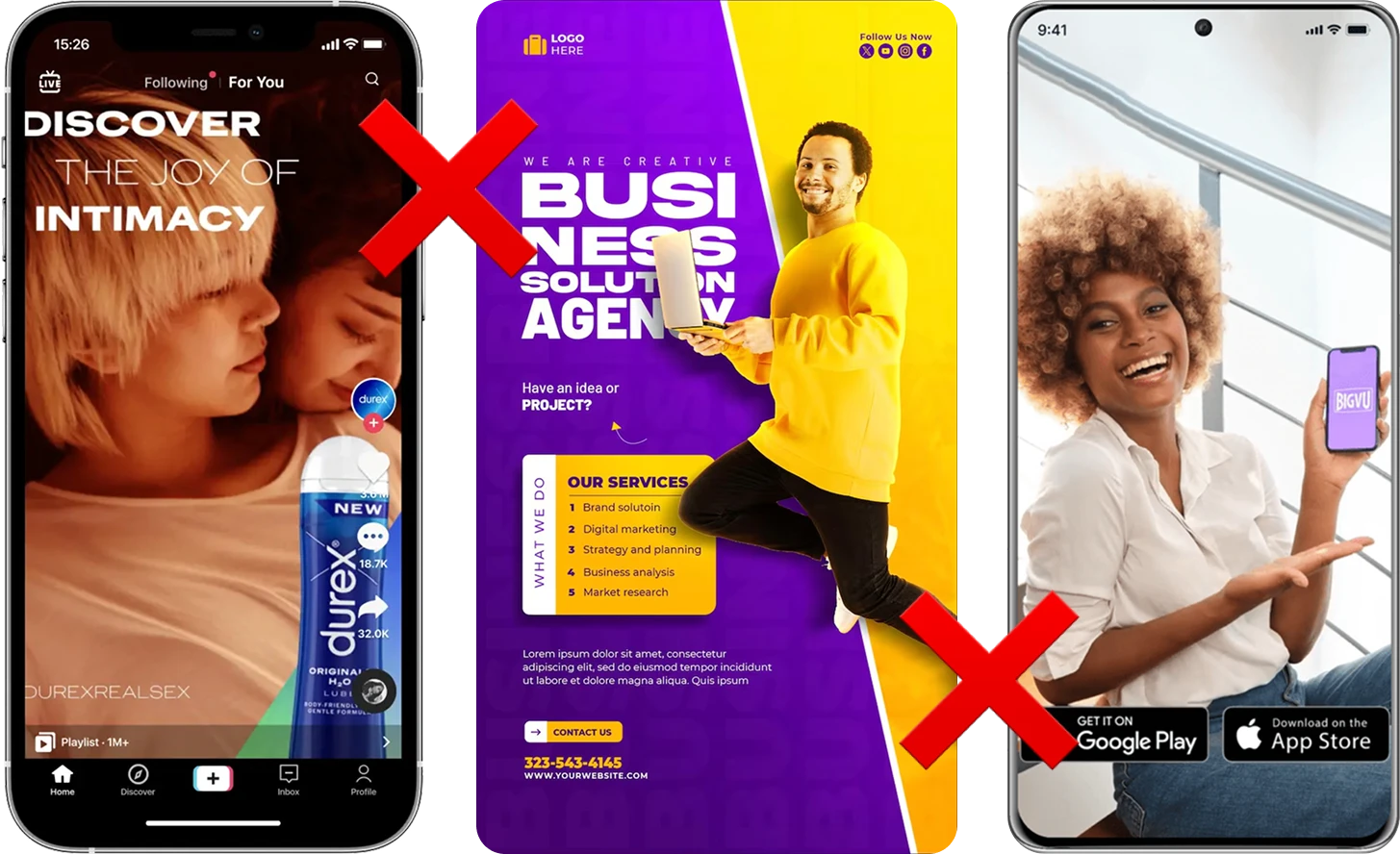
Consistently outperforms polished, corporate-looking creative. This is actually one of the places where AI-generated visuals have a genuine edge. With AI you can generate animation styles or create videos that feel hand-crafted, stylized, or genuinely weird — aesthetics that don't pattern-match to "ad" in the viewer's brain. The uncanny valley, used intentionally, is an attention machine.
3. The surprising Ad: learn, laugh, or be weirded out ⚡
A good ad has to give you something. You either learn something you didn't know, laugh at something unexpected, or encounter something strange or interesting enough that you can't look away. The worst possible outcome, worse even than an ad that offends, is an ad that produces no reaction whatsoever. Neutrality is the death of advertising.
The science behind this is rooted in how memory consolidation works. Emotional arousal — positive or negative — signals to the brain that an experience is worth storing. Surprise, in particular, triggers a small burst of dopamine that primes attention and improves recall. Humor is the most reliable trigger in this category, and also the most abused. Bad humor in ads feels desperate.
Good humor in ads feels like a gift — and people share gifts!
4. Framing 🖼️
- "Create a video ad in 2 days."
- "Stop wasting two weeks on video production."
👆 These two sentences communicate identical information. But one activates loss aversion and the second outperforms the first in almost every test, with the same product, the same audience, and the same offer.
The pain of losing something is much stronger than the pleasure of gaining something.
People evaluate gains and losses differently. So when your ad is framed around what the viewer avoids losing rather than what they stand to gain, it lands harder.
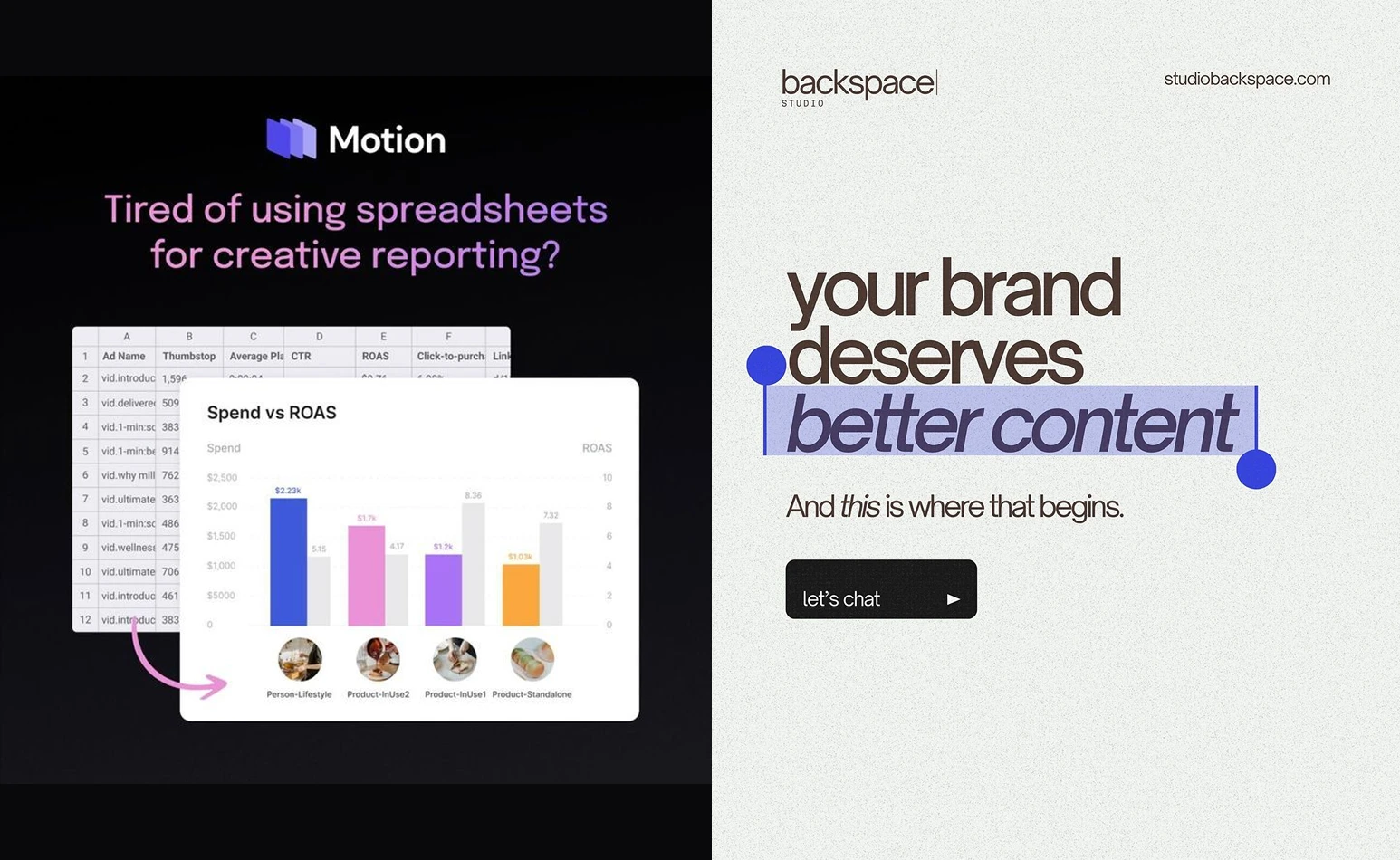
💡 Practical application: write two versions of your headline. For example "create more content faster" against "stop falling behind competitors with bigger budgets". Test both. The loss-framed version will usually win (but not always). Some audiences and some products respond better to aspiration. The only way to know is to run it.
5. Cognitive Load 🧠
When an ad asks it to parse multiple messages, evaluate multiple calls to action, and make multiple decisions simultaneously, the human brain shuts down.
When the information presented is a lot, the user disengages. In the context of a 6-second video ad competing with an infinite scroll of content, "disengages" means they've already moved on before your CTA appeared. The rule is simple: one idea per ad, one CTA per ad.
Hick's Law reinforces this from a decision-making angle. Decision time increases with the number of options available. Every additional choice you give a viewer is a reason not to act. A single, clear, obvious next step converts better than a menu of possibilities.
6. Immersive Experiences 🎬
Distraction-free interfaces where the content occupies the viewer's full field of attention, generate dramatically higher engagement. The formats that fill the screen perform better.
An ad designed for TikTok's 9:16 vertical format is a different creative brief from an ad designed for YouTube's 16:9 horizontal experience. A vertical ad repurposed for horizontal feels wrong in ways the viewer can't articulate but definitely feels. Think about the context before you think about the content. The immersive potential of each format is different, and the best AI creative is built for the specific canvas it's going to live on.
7. Don't trick the user 🚪
When people feel trapped or manipulated by advertising, they build negative associations with the brand itself. The ad converts once and loses a potential customer for years.
A satisfying ending is actually part of what makes content shareable — people want to pass along things that feel complete. Instead of advertisement that don’t allow viewers to disengage with a sense of completion (a clear ending, a resolved narrative, a natural stopping point).
The narrative should close. The viewer should know the story ended. A clear CTA at the end of a resolved arc performs better than a frantic last-second push. Give people a way out. They'll like you more for it — and they'll come back!
The teams we see putting this psychology to work most effectively are the ones who've removed the production bottleneck entirely — who can go from concept to finished video ad in two or three days instead of two to three weeks, test multiple framings simultaneously, and iterate based on real performance data rather than pre-production assumptions.
Our platform features AI tools to create videos, generate and animate images, produce music and sound effects, 3D objects, marketing and brand assets, and craft creative content. With these AI tools, you can execute ideas quickly and efficiently.