How the designer's job is changing with AI in 2026
The design process designers were taught for decades is being replaced. Here's what's actually changing, what skills still matter, and what the role looks like now — according to the head of design at Claude, Jenny Wen
The way you work as a designer is shifting faster than you can keep up with. You're not alone — even the people at the center of it are saying the same thing.
Jenny Wen, head of design at Claude and former director of design at Figma, recently described the moment clearly:
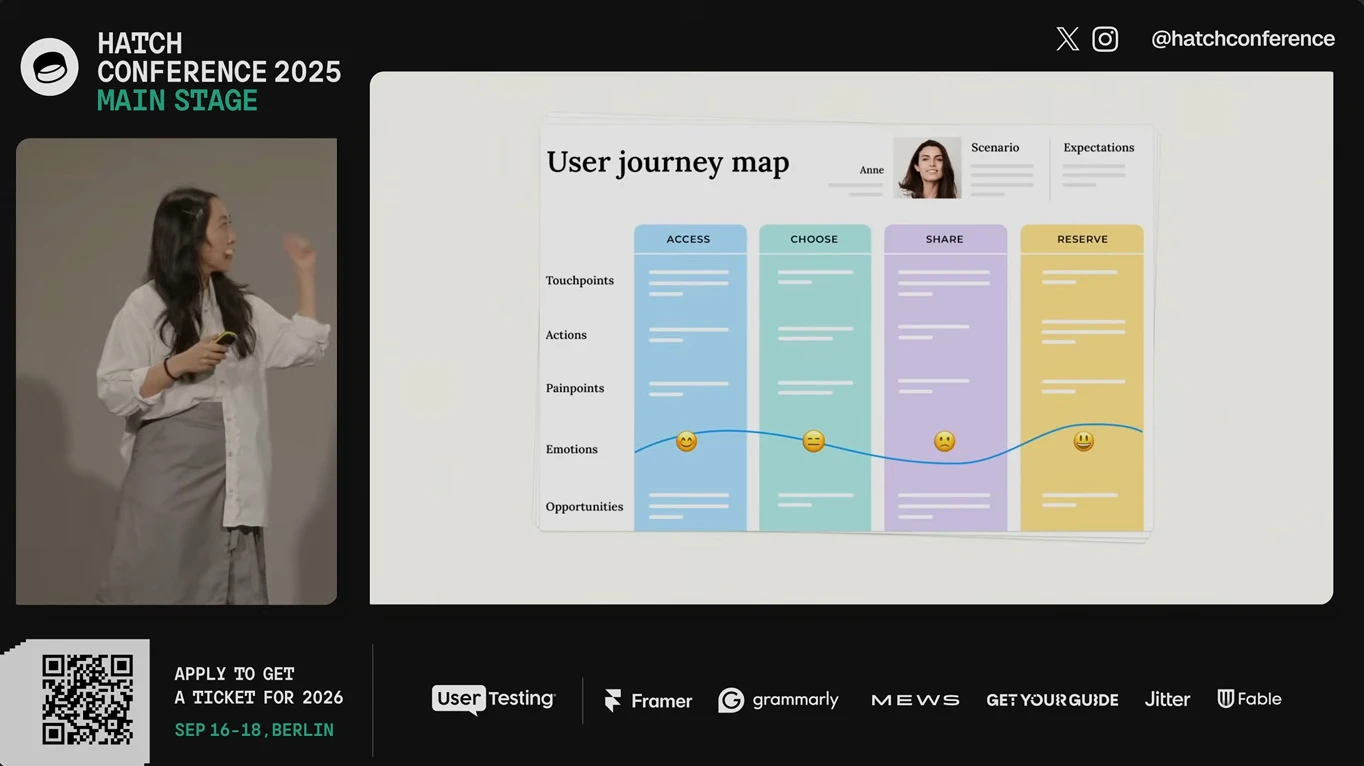
"This design process that designers have been taught — we sort of treat it as gospel. That's basically dead."
That's a strong statement from someone who has led design teams at Figma, Dropbox, Square, and Shopify. So what's actually changing, what's replacing it, and what does it mean for your career?
Here are some insights from her when interviewed on Lenny's Podcast, YouTube video below:
What the new split in design work looks like
Jenny describes design work today as split into two distinct modes:
1. Supporting execution.
**Engineers are shipping constantly. **Designers are no longer gatekeepers who approve things before they ship — they're consultants who help teams make better decisions as they build.
A big part of the job now is pairing directly with engineers: giving feedback on what they've built, explaining the reasoning behind design decisions so engineers can internalize principles rather than just follow specs, and doing the last-mile polish that takes a functional feature to a polished one.
A few years ago, Jenny estimates 60–70% of her time was mocking and prototyping. Today, that's down to 30–40%.
The remaining time has shifted toward direct engineering collaboration and — something that barely existed before — implementation. She now spends part of her day writing code, going into the frontend and polishing details directly.
2. Setting direction.
Someone still needs to point the team toward something.
In a world where engineers can build anything quickly, the risk isn't lack of execution — it's execution in too many directions at once. A designer who can articulate a coherent 3–6 month vision and create a prototype that orients the team is more valuable now than one who produces a beautiful but slow-moving design document.
Does AI get good at taste and judgment too?
This is the question that makes most designers uncomfortable, and Jenny doesn't dismiss it.
"I think AI will get better at taste and judgment and design. We might be holding on to that a little bit too much."
But her view on where humans remain essential is specific: accountability.
"At the end of the day, someone has to decide what is actually going to get built and what actually matters. Someone still needs to be accountable for the decision."
This isn't just about aesthetics. It's about the hard conversations: what goes into a feature, what gets cut, what the product is actually for. AI can inform those decisions and generate options or recommendations. But as long as a product has real consequences for real users, someone has to own the call.
The three designer archetypes hiring managers want now
When asked what she looks for when hiring, Jenny describes three profiles:
1. The strong generalist.
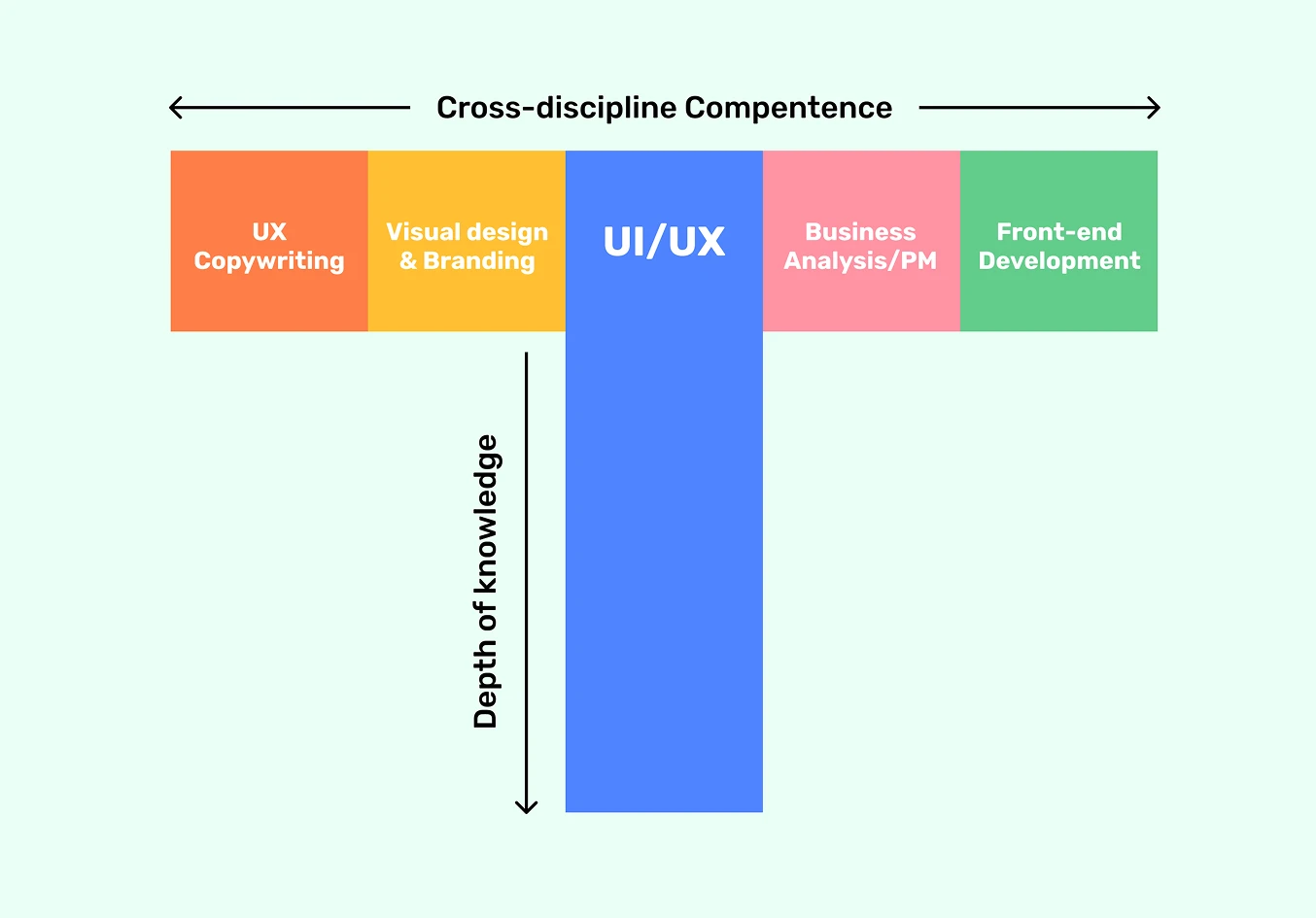
Not someone who's decent at a lot of things, but someone who is genuinely excellent, "80th percentile good", at several distinct skills. As the design role stretches to include more engineering and product thinking, someone who already has strong footing in multiple areas can flex into whatever the role needs. Jenny calls this the "block-shaped" designer, as opposed to the traditional T-shape
2. The deep specialist.
The T-shape, but where the vertical goes unusually deep. Someone who is in the top 10% of the industry at something specific — a technical designer who is essentially half software engineer, a visual designer who produces work at a level of craft that genuinely differentiates the product. In a world where AI can produce competent work in most areas, extreme depth in one area becomes a clearer differentiator.
3. The craft newrad.
This is the one Jenny says most companies are overlooking: an early-career designer who is a fast learner, eager, humble, and not yet shaped by years of process.
"Having somebody who almost has like a blank slate and is just a really quick learner — that's super valuable. Most companies are just hiring senior talent, but given how much the roles are changing, someone who doesn't have all these baked-in processes and rituals in their mind is really interesting."
What's absent from this list is notable: the mid-level designer who has learned the traditional process, applies it consistently, and produces reliable but unremarkable work. That profile has the most exposure to the current shift.
What this means if you're a designer right now
A few practical conclusions from where this is heading:
Get closer to the build.
If you're not already working directly in code — even at the level of CSS tweaks, last-mile polish, or frontend adjustments — start now. Jenny describes implementing code as one of the fastest-growing parts of her role. Designers who can move between Figma and a code editor will be significantly more valuable than those who can only do one.
Compress your process.
If your default is to want more research time, more iterations, more sign-off before anything ships, that instinct will increasingly put you in conflict with how fast the rest of the team is moving. The question isn't whether to skip rigor — it's how to apply it faster and closer to the real product.
Protect direction-setting time.
In an environment of constant execution, the easiest thing to cut is the time to think about where things are heading. Jenny deliberately blocks time for this. It's the hardest work to make time for and, arguably, the most important.
Don't assume experience is protective.
The designers most at risk in this transition aren't the junior ones — they're the ones who have invested years in a specific way of working and find it hardest to let go of. Jenny explicitly says early-career designers with blank slates are exciting to her right now precisely because they haven't calcified.
What Jenny describes at Anthropic is the leading edge of a shift that's reaching every design team, at every kind of company, at different speeds.
Her talk at a Berlin conference declaring the design process dead "has been the most resonant talk I've done" — which suggests the feeling is widespread, even if most teams are still in the early stages of working out what comes next.
The designers who will do well through this aren't necessarily the ones with the most experience or the best portfolios. They're the ones who are paying attention to the shift, adapting their skills toward where the role is actually heading, and staying curious enough to keep up with a pace of change that, as Jenny puts it, makes things feel outdated within months.
Artificial Studio is an AI-native creative platform with 50+ tools for video, image, audio, and visual production — built for creative and marketing teams who need to produce more, faster, without adding headcount.